
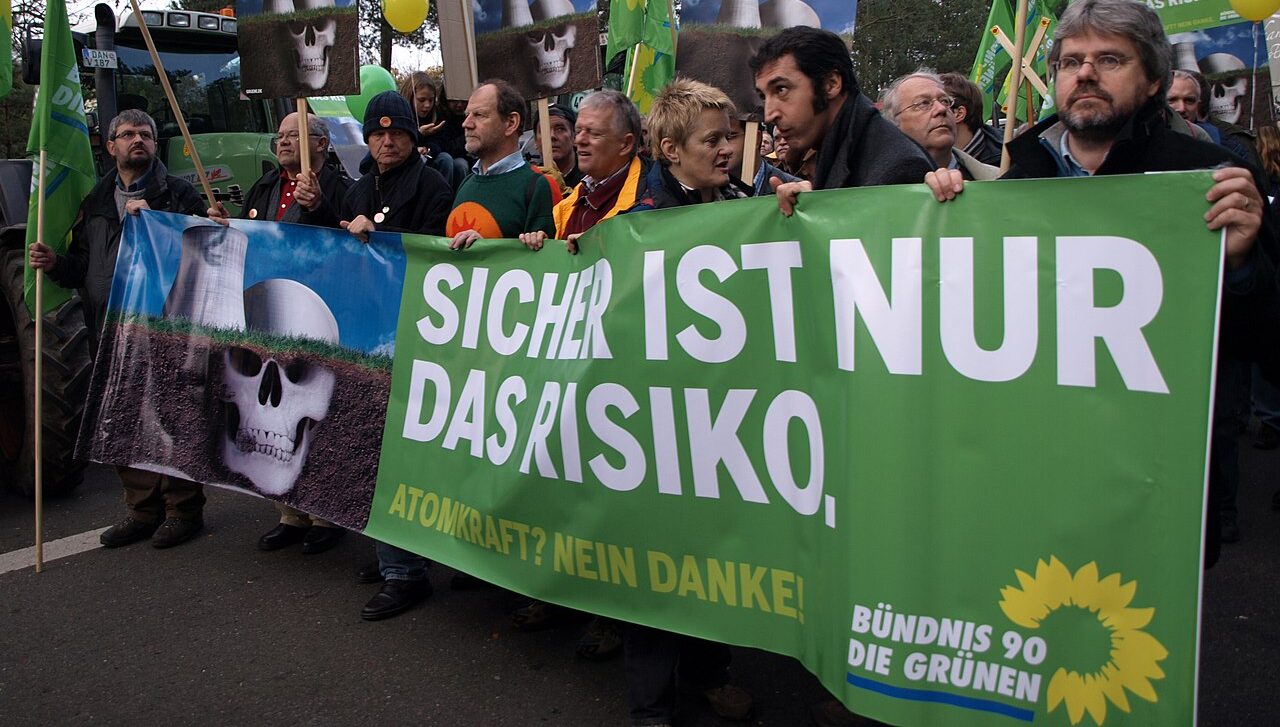
History of the nuclear phase-out: The anti-nuclear power movement in Germany
Lecture by Dr. Astrid Kirchhof
Germany’s nuclear phase-out was the result of decades of social conflict. Since the 1970s, a diverse anti-nuclear movement had been forming, uniting local, ecological, and feminist perspectives. The relationship between the state, science, and civil society was renegotiated.

The lecture illuminates key conflict zones such as Wyhl and Gorleben, showing how distrust of technology and authority took on new forms and how democratic participation—even symbolically—culminated in the “Free Republic of Wendland.” The history of the nuclear phase-out illustrates this by manifesting itself as a cultural history of social change that continues to raise questions about responsibility, sustainability, and future viability.
It is possible to participate via Zoom. Please register by sending a brief email to reform@ressourcencampus-bochum.de.

About Dr. Astrid Kirchhof
Astrid Mignon Kirchhof will be a Winkelmann Fellow at the Deutsches Bergbau-Museum Bochum starting in 2025 and received her habilitation in 2024 from the University of Innsbruck on the environmental history of the GDR. Previously, she worked at Humboldt University of Berlin, Georgetown University, and on international research projects at the Deutsches Museum and other institutions. Her research focuses on transnational social, environmental, and technological history from the 19th to the 21st century.