
We explore how people are interwoven with their materialised environment through various practices and how social institutions emerge and change during these processes. The main aims of ReForm are:
- stimulate a multidisciplinary theoretical debate,
- to broaden the understanding of single case studies through a multi-perspective approach, and
- develop medium-range theories of resources and socio-ecological transformations and apply them to different empirical datasets using proven methods such as agent-based modelling.
Research Areas
ReForm intends to investigate resource-related transformations on a theoretical and empirical level. In doing so, we adopt a “theory of practice” approach that helps analyse the development of societal institutions and their economic action, and that furthermore incorporates current discourses on materiality and embodiment. Our scientific approach is to consider materialised resources as affordances for individuals and societies and to integrate their potential role in transformative processes.
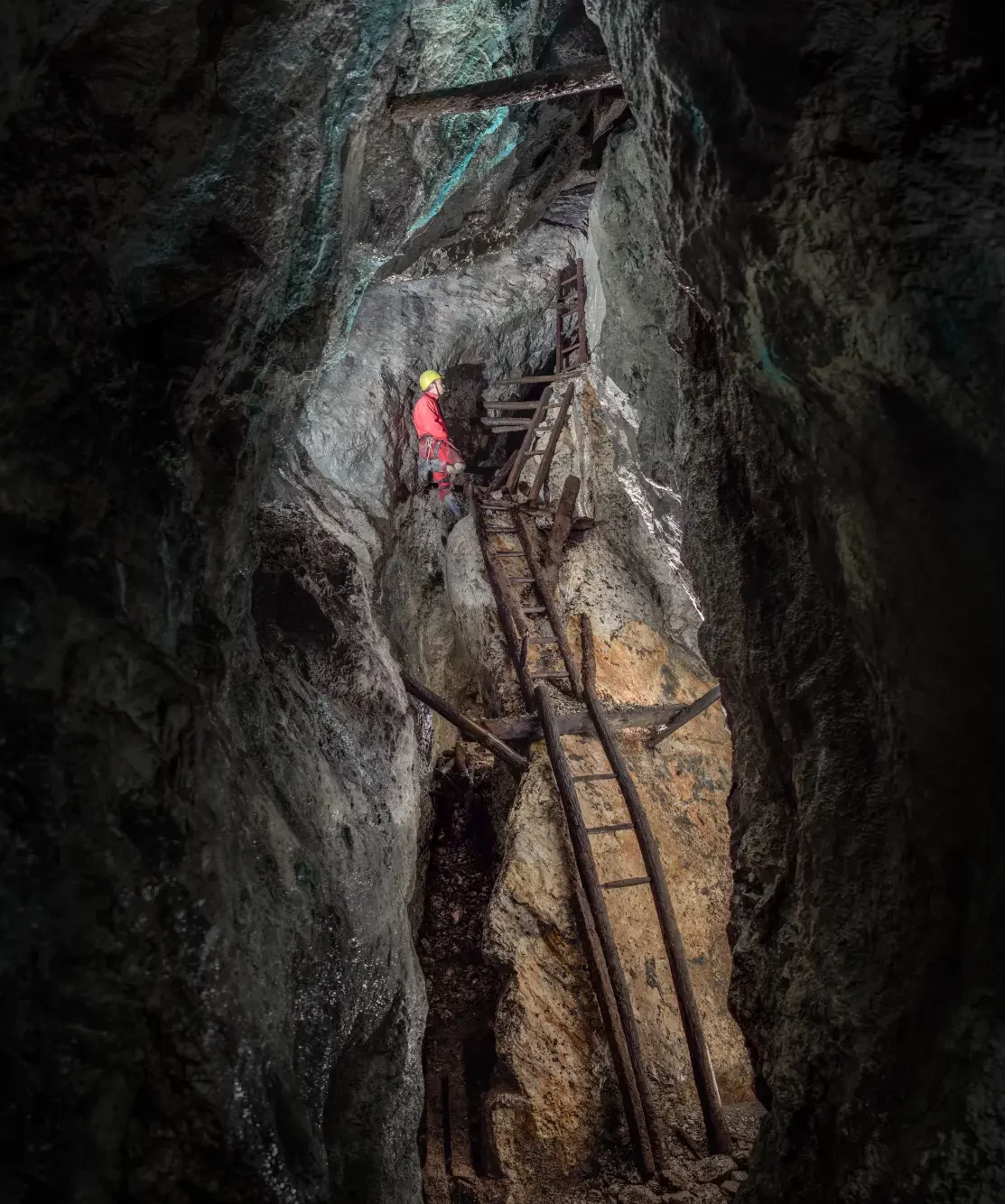
Such a multidisciplinary discourse allows us to embed diverse theoretical and empirical studies within a new, broader field of research on resource-related transformations. This holistic idea of ReForm requires different levels of research, perhaps best described as micro, meso and macro.
The appropriation of resources is a main issue in the history of humankind. The development of technology is based on cultural factors. Societal needs and desires regulate and inspire what kinds of resources are acquired
or ignored. These access-patterns are embedded in landscapes where raw-materials are collected or exploited. Acting with resources discloses therefore individual or societal intentions and additional strategies and concepts of how to achieve a desired yield. These crafts can be described by often specialized workflows
(chaîne opératoires), which allow us to see the entanglement of specific experiences, discoursive and embodied “knowledges” of the human actor.
In our second research area we intend to work on the relation of space and knowledge. As space is produced by all kind of practices we can approach people’s knowledge by tracing their experiences with landscapes and their perception of space. Especially in the context of
resources, spaces and landscapes can be conceptualized as “created by translocal relations and processes of exchange”. A focus will be the “growing” of knowledge and creative impetus through the experiences in/of landscapes and things possibly address what we today perceive as innovation. Being thrown into a new environment leads to the appropriation of that environment and to a certain production of space which can enable transformation. This creativeness is especially required in handling of unknown and partly known landscapes. Whenever humans act, they gain experiences and consequently knowledge in appropriating their environment. Reconstructing such lines of action and practice allows this researcher to approach the specific cultural access of societies to their space.
In the third research area the resource-related transformation of societies will be the focus of discussion and studies. In this field, we regard asymmetries as important challenging factors since asymmetries are often related to environmental issues and cultural habits. They can put various kinds of pressure on societies. Asymmetries are not only defined as economic differences between social groups but also as cultural aspects that are sensed as unequal such as the access to ritual or rural spaces or participation in societal processes. Growth and decline (or “de-growth”) for instance are important aspects in this tension of asymmetries. In recent years the debate has evolved from the discussion of cyclical models, which has been question-marked in recent years. Interpreting economies and societies as complex adaptive systems may be a useful theoretical approach or rather interpreting economies as integrative element of social practices. In cases when conscious choices are regulating decisions about how resources are handled, we may call these choices governance structures or institutions.
Ethnographic observations often show much clearer how societal choices as, for example, in specific ways of communication through exchange or explicit conditions in exploiting resources are guided by “irrational” ritual needs or general norms. This stands in contrast to our assumption of our seemingly “rational” interests in the sense of “modern” economies: Governance is therefore a system of various cultural choices embedded into societal needs.

Research Fields
The three research areas are divided into more concrete research fields in which the different disciplines and scientists involved will cooperate in their concrete research activities. These areas will be the focus of our debates and scientific work.
This research topic focuses on the aspects of a rather conscious appropriation of raw material and transforming to resources and of the opposite: The occurring of them that societies influenced by a flow of events that they only could react in a more passive way.
The genesis and the production of knowledge will be discussed on the basis of resources and materials. The debate seeks to establish a detailed discussion on the processes of appropriation and various forms of knowledge enmeshed with such processes.
cultured landscapes are socio-natural arenas of a deepened bounding of emotions and experiences of humans and communities as part of their collective memory. Practical and ideological concepts will be investigated on the basis of examples to understand the role of resources within the production of identity.
Practices are regarded an important vehicle to investigate the entanglement of various forms (internalized and externalized) of knowledge and any form of material expressions of making and consuming with, of and to resources (materialized practices on the basis of the [technical] biography of things) (microscale approach).
The broad field of social transformations will be investigated especially on the basis of creativity, invention and innovation, both displaying and having different impacts on communities in regard of macroscale events that effects larger parts of populations (macroscale approach).
Daily life practices and shared perceptions constitutes an implicit understanding of environments and therefore direct decision either in regard of resources managements and the integration of materials and resources to cultural expressions. Sensual experiences in production and consumption are particularly investigated.
Evolutionary economic theory regards the governance and the implementation of innovation as economic strategy as tightly interwoven. Governance structures and their perception and conception of decision makers (individuals and groups) are investigated in their effects on economic and social transformation but also their decision horizons when dealing with accidental effects (macroscale side-effects of policy and environment [e.g. climate, exhaustion of resources])
Scales are decisive when it regards the influence of resource-related processes to transformation of social and economic spheres. Multi-dimensional spatial frameworks consider networks, connectivity, relationality and the relation of size to processes should be integrated in theoretical approaches.